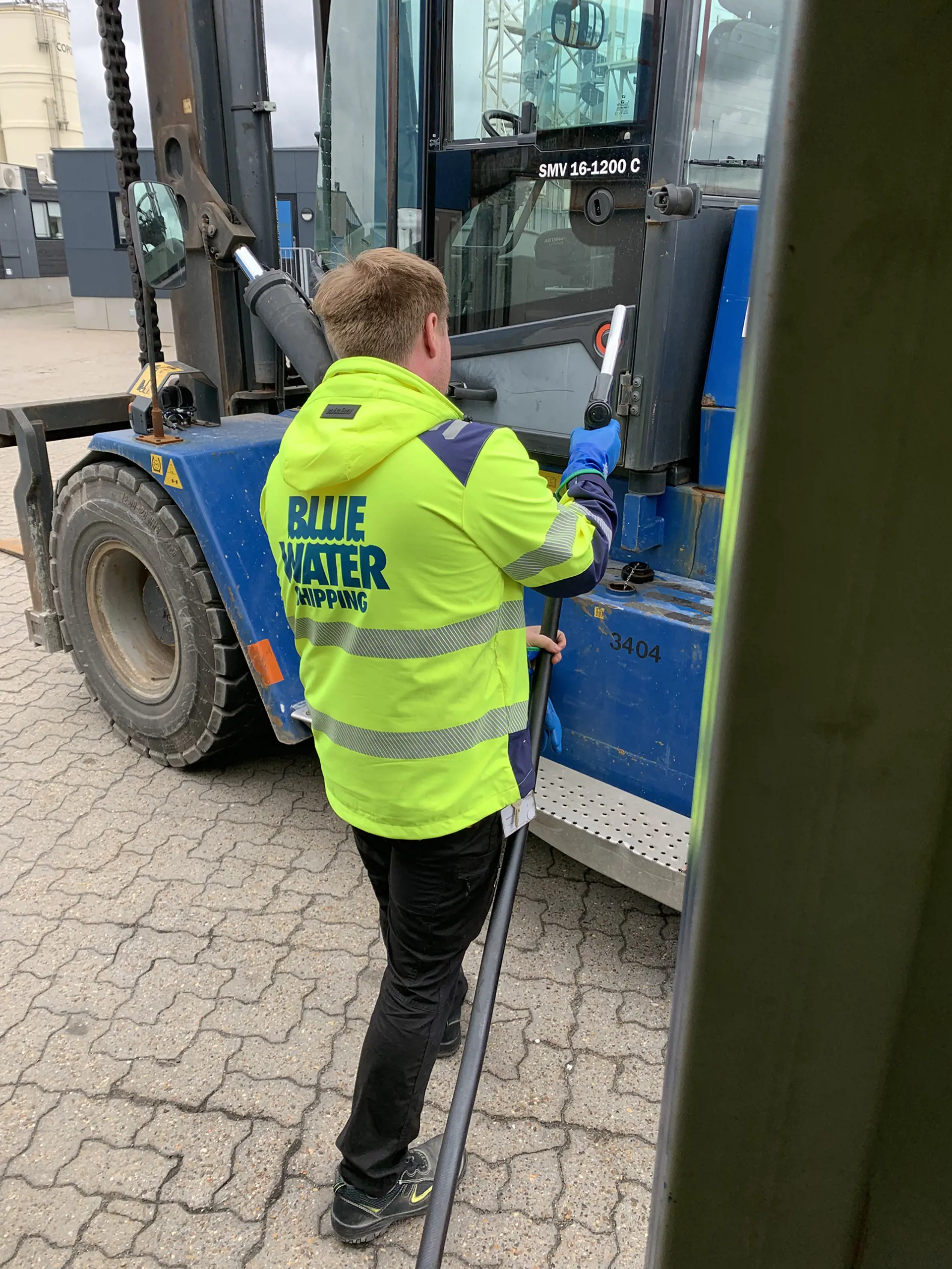
Blue Water significantly reduces CO2 emissions by switching to HVO in port operations
600,000 litres of diesel are being replaced by the alternative fuel HVO, reducing CO2 emissions by up to 90% at port sites in Denmark

Updated:
Blue Water has introduced HVO (Hydrotreated Vegetable Oil) as fuel for its port operations in Denmark, reducing CO2 emissions by up to 90% compared to conventional diesel. The transition covers approx. 600,000 litres of fuel annually, equal to a saving of 1,575 tonnes of CO2 based on 2024 figures.
The alternative fuel is now powering equipment such as forklift trucks, reach stackers and terminal tractors at Blue Water’s port facilities, supporting daily operations including heavy lifts of wind turbine components.
“Switching to HVO is a decisive step in our sustainability strategy. It shows we can make meaningful reductions here and now, while continuing to deliver strong logistics services to our clients,” says Susanne Veie Svenningsen, Chief Compliance & Sustainability Officer at Blue Water.
Port of Esbjerg is already working actively towards climate neutrality, for example by providing shore power facilities for vessels. As the largest operator in onshore port activities in Esbjerg, Blue Water has played a central role in driving the transition to HVO, with strong support from local stakeholders.
“We have had a strong partnership with Blue Water for many years, and we are delighted that it is now also making a concrete contribution to reducing CO2 in Esbjerg. It is important that we work together across companies and functions to bring about real change,” says Karen Sandrini, ESG & Sustainability Manager at the Port of Esbjerg.
A major step towards Blue Water’s global reduction target
In 2025, Blue Water is validating its commitment to the international Science Based Targets initiative, aiming to reduce scope 1 and 2 emissions by 42% by 2030. With HVO in the tanks, the company has the potential to achieve a 37.8% reduction annually, bringing it significantly closer to this target.
“This is an important milestone, and we will continue to seize opportunities that help us accelerate the green transition across our port operations,” Svenningsen adds.
The implementation in Esbjerg, Aarhus and Lindø marks both an important contribution to climate action and a strategic investment in strengthening Blue Water’s position as a responsible logistics partner.