


Cost-effective sea transport solution
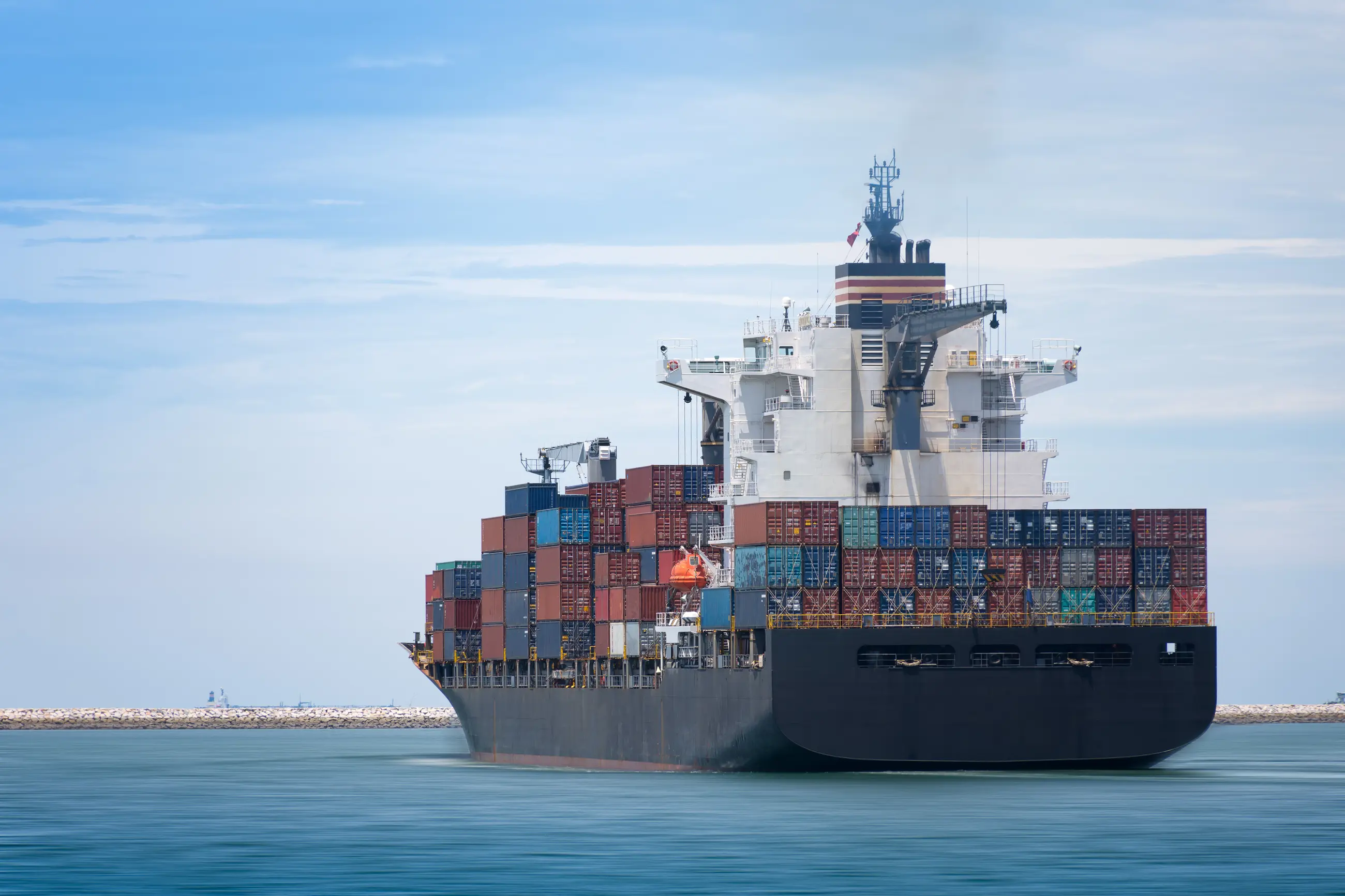
Enjoy cost-efficiency when choosing a sea freight solution. Through our worldwide network of offices and contact with all major shipping lines, we can deliver your cargo to any port in the world

Enjoy cost-efficiency when choosing a sea freight solution. Through our worldwide network of offices and contact with all major shipping lines, we can deliver your cargo to any port in the world
At Blue Water, we provide reliable and cost-effective sea freight solutions that are tailored to meet the needs of businesses around the world. As a trusted third-party logistics (3PL) partner, we combine the strength of our independent global network with local expertise to ensure the seamless transport of goods by sea.
Our dedicated teams are ready to support your supply chain every step of the way, whether you need to move large volumes in full container loads (FCL) or benefit from shared capacity with less than container loads (LCL).
Our customers operate in different industries with diverse transport needs. That is why we offer a wide range of sea freight forwarding services that can be scaled to match your business's needs. From standard container shipping to complex project cargo, Blue Water's customised solutions optimise your logistics processes while keeping costs under control.
With access to all major trade lanes and shipping routes, we ensure that your cargo moves efficiently and securely, regardless of the destination. Our strong partnerships with leading carriers enable us to offer competitive rates and reliable transit times.
Beyond standard shipping, we provide a range of additional logistics services to create streamlined supply chains. These include customs clearance and compliance support, door-to-door delivery, cargo (de)consolidation, warehousing, distribution as well as real-time tracking and visibility.
Our end-to-end approach ensures that your goods are handled with care at every stage, from the port of loading to the final delivery point.
As a family-owned company, Blue Water is built on trust, commitment and long-term partnerships. With offices and partners worldwide, we combine global reach with local knowledge to provide the right solution for every shipment. Our proactive approach and commitment to high-quality service ensure that your sea freight is transported efficiently and managed with precision and care.
No matter the size or complexity of your shipment, Blue Water is here to ensure your sea freight logistics are smooth and efficient. By choosing us as your logistics provider, you get a dedicated partner committed to helping your business succeed.
As an independent freight forwarder, we cooperate with a large variety of carefully selected partners worldwide. We choose our business partners based on criteria, such as quality, service and reliability, because we want our clients to trust us. We repay our clients' trust with quality solutions, unique and personal service and by keeping our promises.
Through our network of consolidators, we offer LCL and FCL, door-to-door delivery as well as full package solutions.
By combining these core services with our in-house expertise, we can help you strike the right balance between cost, speed and reliability.
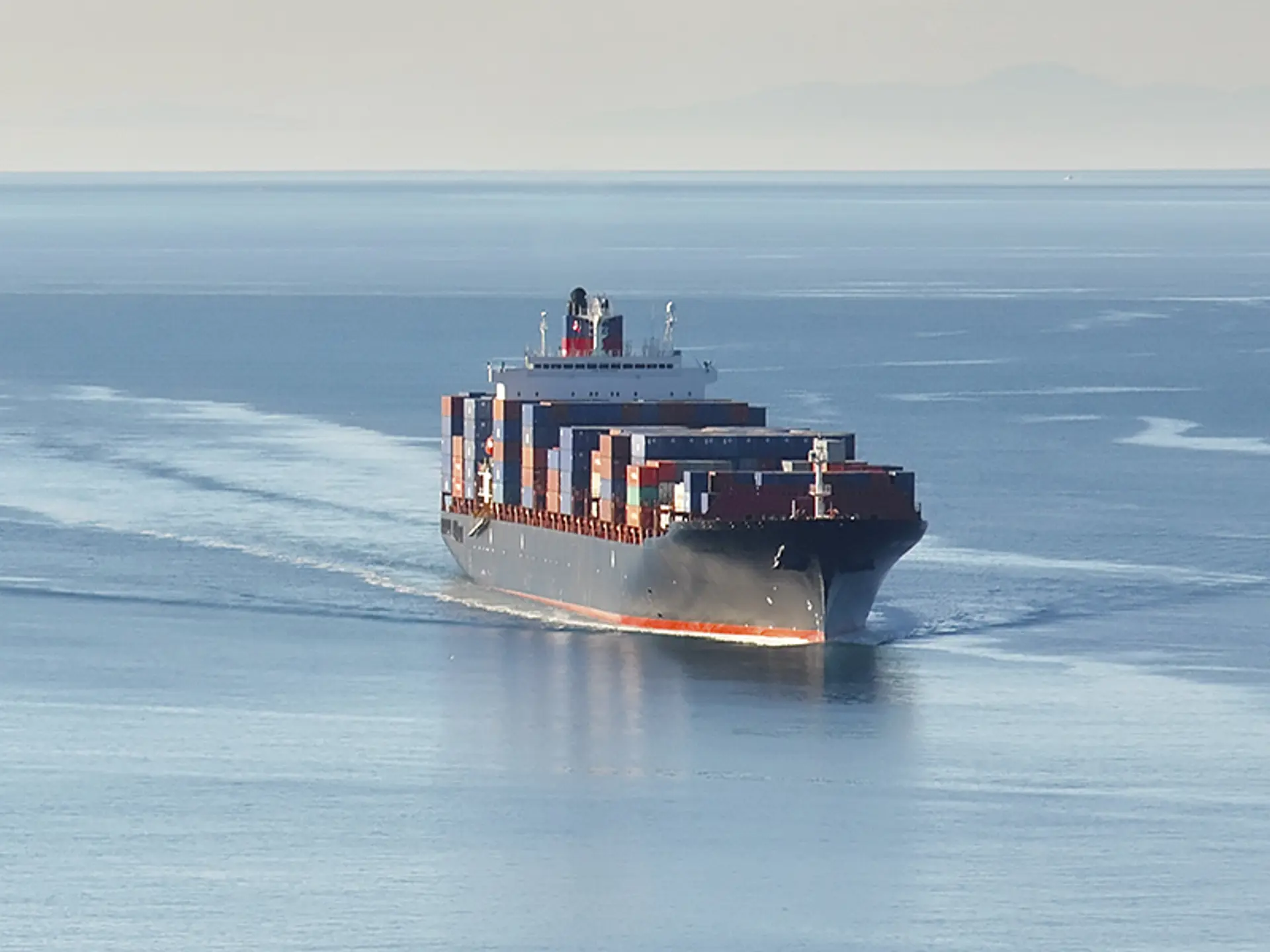
We can provide a container for sea freight for just the kind of cargo you have

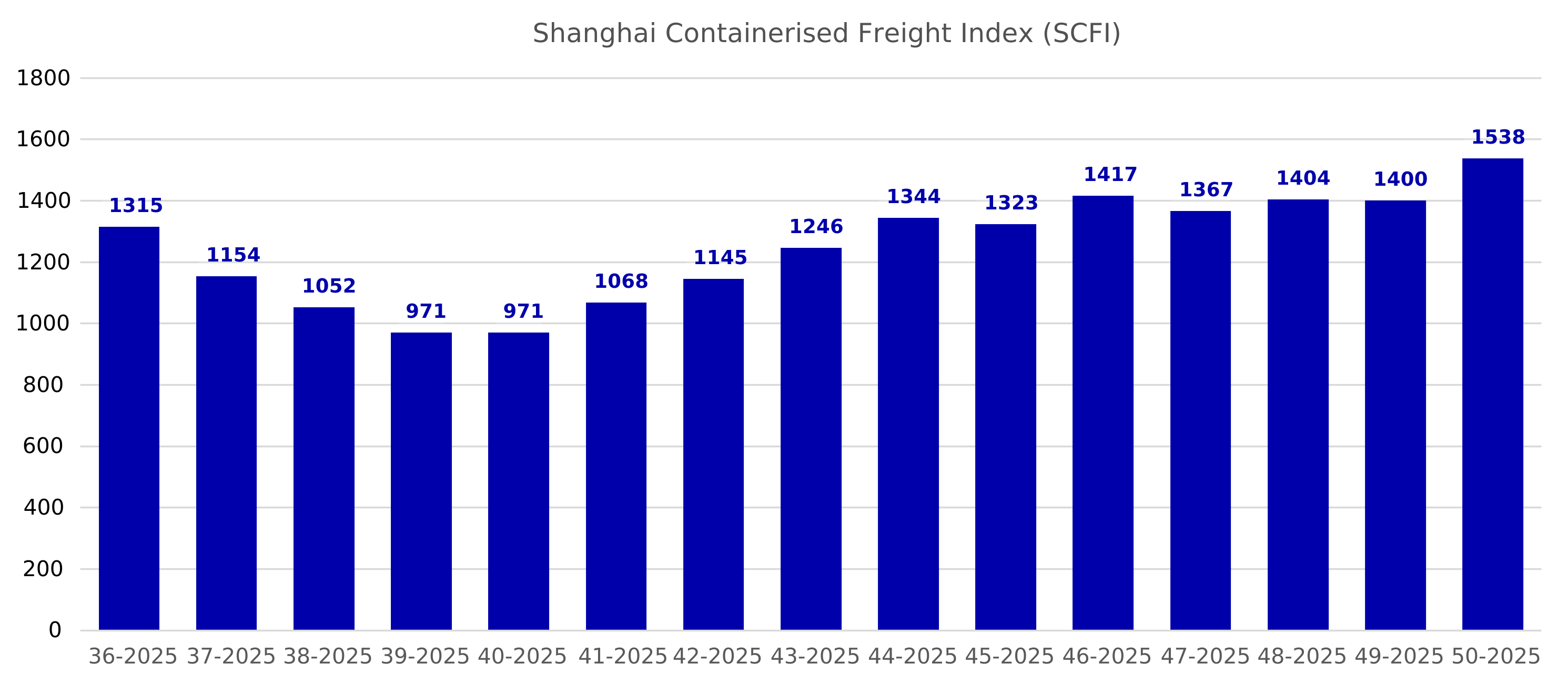
SCFI is the most commonly used freight index for sea freight on a global scale. SCFI offers an overview of freight rates on containers from China on a weekly basis.
The name of the index originates from the world's largest container port located in Shanghai, China. SCFI has served as official price index on the global freight market since 2009.
The freight information is reported by major Sea Carriers, Freight Forwarders and Shippers and based on 20’ ft rates. SCFI is updated each Friday and valid for the next week (Monday to Sunday).
It covers 13 individual shipping routes and below you will find information of the China to Europe (Hamburg, Rotterdam, Antwerp, Felixstowe, Le Havre) route.

If you need to ship large quantities, we will find the right FCL solution for you and your cargo.

Share container capacity with other shippers - a cost-effective solution when shipping minor quantities.

Through our network of partners and agents, we offer you worldwide cross trade solutions.
Be prepared and make sure that you are always updated on the latest fees, surcharges, taxes and duties. The charges are variable and subject to adjustment according to the market development.
We adjust the charges on a monthly basis. You can always find them here – feel free to visit to keep up-to-date.


Depending on your needs, we will find the right solution for you. With insight into your business, we can set up a solution fitting and improving your supply chain. Our solutions cover every transport mode to and from every corner of the world.

One of the Blue Water core strengths is our in-house team of customs specialists. We have a unique focus on solving customs issues and easing the customs clearance procedure. With a global setup and local know-how, we are always up to date.

Protect your cargo by taking out a cargo insurance at a favourable premium.
Our insurance offers better coverage than the average cargo insurance. We can also advise you on Incoterms.
Sea freight is often the preferred transport solution when shipping large volumes of cargo internationally and transit time is less critical than cost efficiency. It is commonly used for containerised cargo, project cargo, industrial equipment, raw materials and other shipments that would be impractical or expensive to transport by air.
Compared with air freight, sea freight can accommodate significantly larger shipment sizes and a wider range of cargo types, including oversized and heavy cargo. It also provides access to global trade routes connecting major ports around the world.
The most suitable transport mode depends on factors such as cargo volume, budget, transit time requirements, destination and supply chain planning.
Sea freight is used across a wide range of industries that rely on international trade and global supply chains.
Common sectors include manufacturing, retail, automotive, energy, renewables, construction, mining, food and beverage, pharmaceuticals and industrial production. Sea freight is also widely used for project logistics involving oversized equipment, machinery and infrastructure components.
Many businesses use sea freight as their primary transport mode for international shipments because it can move large quantities of cargo efficiently between global markets.
Sea freight transit times vary depending on the origin, destination, carrier schedules, transhipment requirements, customs procedures and port operations.
Regional shipments may take several days, while intercontinental shipments often take several weeks. Door-to-door transit times are usually longer than the vessel's sailing time because they also include inland transportation, terminal handling, customs clearance and cargo processing.
Transit times can also be affected by weather conditions, port congestion, seasonal demand and disruptions within global supply chains.
Yes. Sea freight is frequently used as part of a multimodal transport solution that combines ocean transport with road, rail or air freight.
For example, cargo may be collected by truck, transported to a port, shipped internationally by sea and then delivered by road or rail to its final destination. This approach helps create efficient door-to-door supply chains while taking advantage of the strengths of different transport modes.
Multimodal transport is particularly common for international shipments moving between inland locations and overseas markets.
Yes. Most container shipments can be tracked throughout the transport process.
Shipment visibility may include information such as booking status, container movements, vessel departures, transshipment events, estimated arrival times and final delivery updates. The level of detail available depends on the carrier, route and tracking systems being used.
Tracking tools help importers and exporters monitor cargo progress and improve supply chain planning.
Yes. International sea freight shipments require documentation and customs procedures that vary depending on the countries involved, the cargo type and applicable regulations.
Common shipping documents may include bills of lading, commercial invoices, packing lists, certificates of origin and customs declarations. Additional documentation may be required for certain commodities, controlled goods or regulated markets.
Blue Water Shipping can assist with customs clearance, documentation requirements and compliance processes as part of an international transport solution.
In most cases, sea freight is significantly more cost-effective than air freight, particularly for large, heavy or high-volume shipments.
Ocean vessels can transport substantially larger quantities of cargo than aircraft, which generally results in lower transportation costs per unit. For this reason, sea freight is often selected when cost efficiency is more important than transit speed.
Air freight remains the preferred option for urgent shipments, high-value goods and cargo with strict delivery deadlines. The choice between sea freight and air freight depends on the balance between cost, transit time and operational requirements.
FCL stands for Full Container Load, while LCL stands for Less than Container Load.
FCL shipping means a single shipper uses the entire container, regardless of whether the container is completely filled. This can provide greater control over loading, handling and transit schedules.
LCL shipping allows multiple shippers to share space within the same container. It is commonly used for smaller shipments that do not require a full container.
The choice between FCL and LCL depends on shipment volume, budget, cargo characteristics and transit time requirements.
In many cases, FCL shipping is faster than LCL shipping because the container moves directly through the transport chain without requiring cargo consolidation or deconsolidation.
LCL shipments must typically be consolidated with other cargo before departure and separated again after arrival. These additional handling processes can increase transit times and introduce extra processing steps.
However, actual transit times depend on factors such as the shipping route, carrier schedules, port operations and customs procedures. The difference between FCL and LCL transit times can vary from shipment to shipment.
A 20-foot container is often used for smaller shipments or heavy cargo where weight is the limiting factor. A 40-foot container provides more space and is typically used when volume is more important than weight.
For many shipments, the choice between a 20-foot and a 40-foot container depends on whether your cargo reaches the container’s weight limit or fills the available space first. Dense cargo such as machinery, metal parts or raw materials may be better suited for a 20-foot container, while lighter and more voluminous goods may benefit from a 40-foot container.
High cube (HC) containers provide additional height and are often used for cargo that requires more vertical space. They can be a good option for lightweight, bulky goods or cargo loaded on taller pallets.
Both 20’ DC and 40’ HC have “lashing rings” in the bottom and top of the containers.
Let our dedicated sea freight experts handle your request or questions. You are always welcome to reach out to us via the form.


Logistics solutions designed to meet the requirements of the aerospace industry

Logistics to units providing humanitarian aid to disaster areas

We do cargo and passenger full charter operations worldwide

Facilitating cargo insurance through recognised insurance company

Customs formalities including customs clearance of goods

Coordination and transport for exhibitors to/from trade fairs worldwide

Logistics to national defence forces, military industries and NGOs

Health, Safety, Security, Environment and Quality requirements

IT solutions tailored to satisfy the clients’ needs

We provide mining logistics covering capital projects and mine supply globally

Transport solutions to the North Atlantic region by sea, road and air
Port-related services to vessels in connection with port calls

Blue Water is a world-leader and pioneer in the renewable energy industry

Loading/discharging of vessels including cargo planning and securing

Cutting-edge engineering solutions to out-of-gauge cargo and project shipments
Experts in chartering of any kind of vessels for any purpose

Scroll to top