How Blue Water moves mega shipments
Blog

Wind turbines, oil rigs and cargo you’d never believe could be moved. Mega transports demand true specialist expertise – and Poul Henning Nielsen is one of the minds behind Blue Water’s global technical engineering team.
When a structure is too large, too heavy or too complex to move by conventional means, the question is not whether it can be transported – but how. For nearly two decades, Naval Architect Poul Henning Nielsen has been one of the experts answering that question at Blue Water.
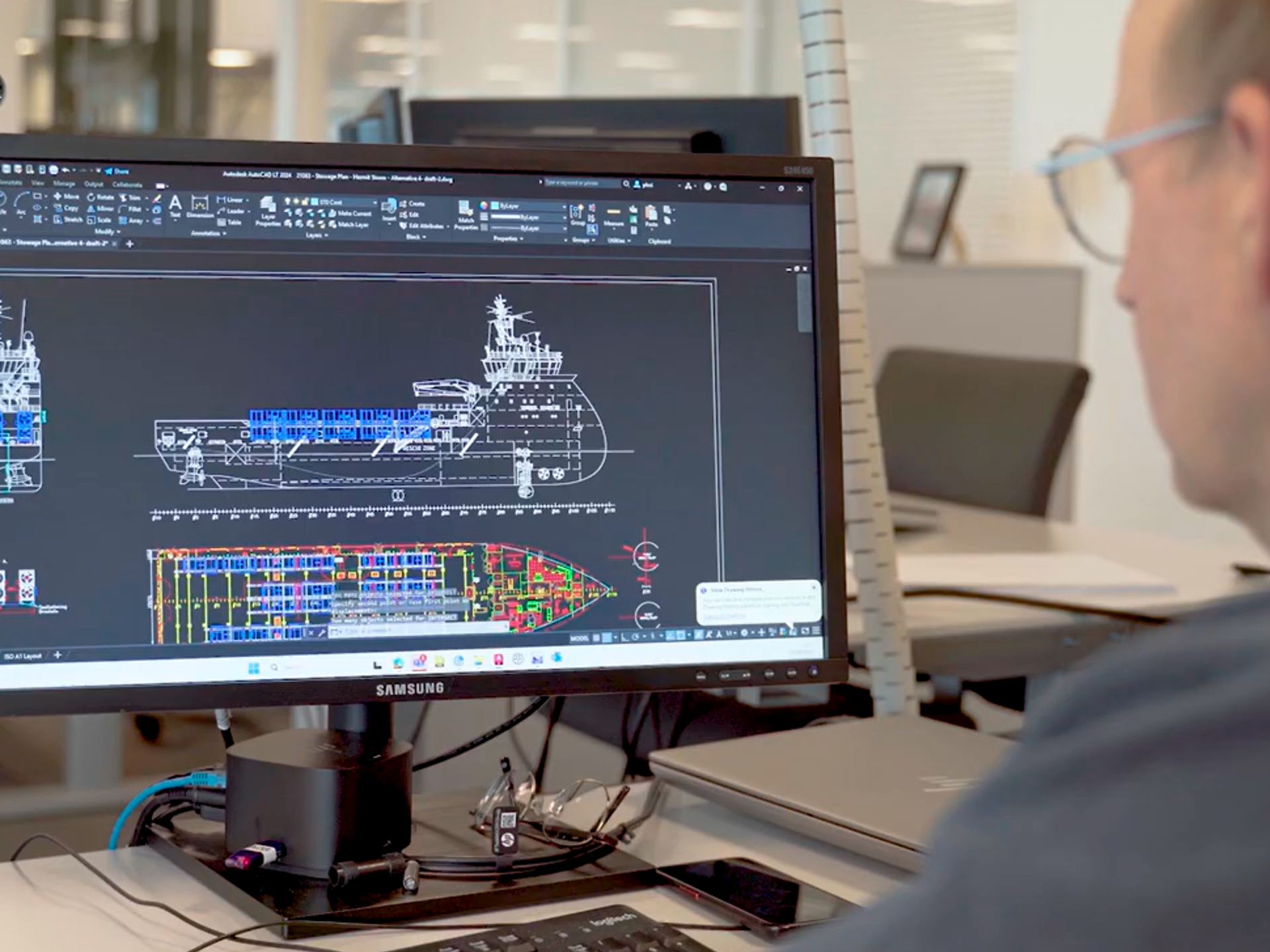
Before joining Blue Water in 2007, I worked as a naval architect, drawing and designing vessels. That background has been incredibly useful here. Understanding how ships and floating structures behave allows us to move things most people would consider impossible, he explains.
Today, Poul Henning works with some of the most technically demanding transport operations within renewables, offshore and heavy industry. His role is to ensure that each project is not only possible, but also safe, stable and compliant with international laws and best practice.
From shipbuilding to logistics solutions
Early in his career, Poul Henning learned to design vessels by calculating their shape, stability and structural strength.
“You learn to think in systems,” he says. “If you can design something that floats, you can also calculate how to move it.”
This mindset proved essential on one of his first major assignments for Blue Water – transporting a floating structure of more than 100 metres to a remote location in the Caspian Sea. To reach its final destination, the vessel needed to pass through a narrow strait. The only feasible solution was to cut the structure into sections, reinforce each part so it could float independently, transport the pieces separately and reassemble them on site.
It was like building with Lego, except each piece weighed 3,000 tonnes. We came in late in the process, after the structure had already been built, which created additional challenges and required very close cooperation with shipyards and engineers, he recalls with a smile.
Not long after the project was completed, the same client returned – this time involving Blue Water early in the design phase.
That made all the difference. When we’re invited in early, we can influence the design so the transport itself becomes feasible. It made the second project easier, safer and more cost-effective.