Greensand Future: Building the European Union’s first operational CO₂ storage facility
Case
Greensand Future is a pioneering CCS project establishing the EU’s first operational offshore CO₂ storage facility. Through close collaboration across partners, the project is turning complex climate ambitions into tangible infrastructure in the Danish North Sea.

Carbon Capture and Storage (CCS) is increasingly recognised as a critical technology in the global fight against climate change - particularly for sectors where reducing emissions is challenging through other means. CCS enables captured CO₂ to be safely transported and injected for long-term containment deep underground, preventing it from entering the atmosphere and contributing to warming. In Denmark, the Danish Energy Agency (Energistyrelsen) is supporting the development of CCS in order to accelerate safe and effective deployment.
At the heart of this effort is Greensand Future, a pioneering CCS project that will become the first fully operational CO₂ storage facility in the European Union. This project demonstrates how large-scale carbon storage infrastructure can be built to support both Danish and EU climate targets while fostering innovation and collaboration across industries.
Why CCS Matters
CCS is recognised in national and European climate strategies as a key component of deep decarbonisation. By capturing carbon from industrial and biogenic sources, transporting it to dedicated facilities and storing it underground, CCS helps close the gap where direct emissions reductions are difficult - for example, in heavy industry and bioenergy sectors.
Greensand Future: From Terminal to Offshore Storage
Greensand Future builds on the pilot project’s success and establishes a full CCS value chain - from capture and liquefaction to storage beneath the seabed of the Danish North Sea. The onshore terminal at Port Esbjerg acts as the hub for receiving, storing and exporting liquefied CO₂. From there, the CO₂ is transported offshore and injected into a depleted reservoir, with the facility expected to begin operations in mid-2026.
Initially, the project aims to store up to 400,000 tonnes of CO₂ per year, with the capacity to scale up significantly toward several million tonnes as infrastructure and capture activities expand. Greensand’s scalable model demonstrates how CCS can grow to support broader climate ambitions across Europe.
The Role of Collaboration: turning ambition into operational reality
Delivering a project of this scale and complexity requires more than technology alone. Greensand Future is a clear example of how close collaboration across disciplines and organisations is essential to turning climate ambitions into functioning infrastructure.
At the centre of the project is INEOS Energy, responsible for developing and operating the offshore storage site in the Danish North Sea. With decades of experience in subsurface operations, INEOS brings the geological expertise and operational oversight required to ensure safe and permanent CO₂ storage.
Port Esbjerg plays a critical role as the onshore gateway. As one of Europe’s leading energy ports, the port provides the physical infrastructure, heavy-lift capability and operational environment needed to handle liquefied CO₂ safely and efficiently. The CO₂ terminal at the port forms the vital link between land-based CO₂ capture and offshore storage.
SubC Partner contributes specialist engineering and construction expertise, supporting the development of the terminal facilities and ensuring that complex technical requirements are translated into robust, buildable solutions.
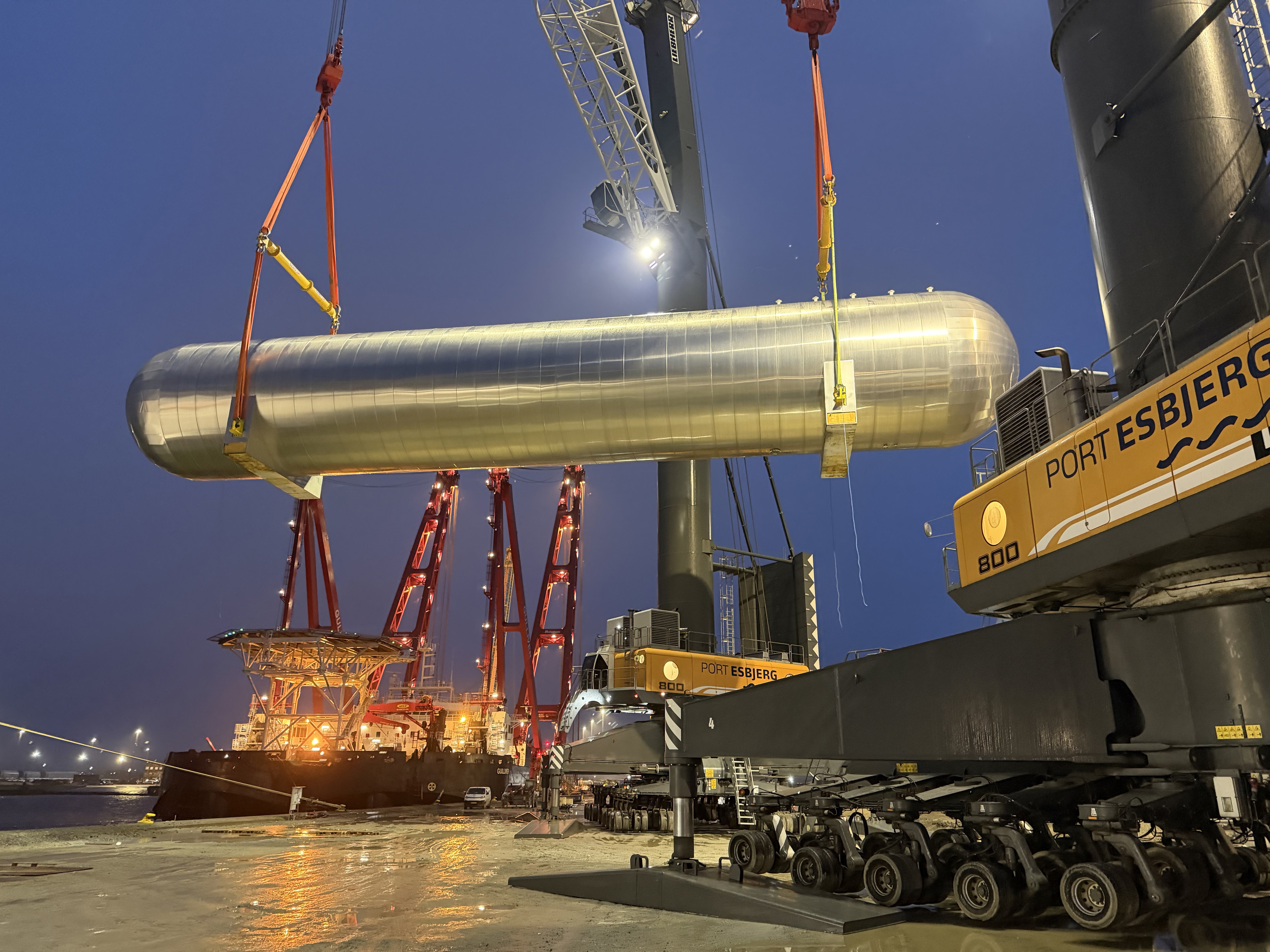
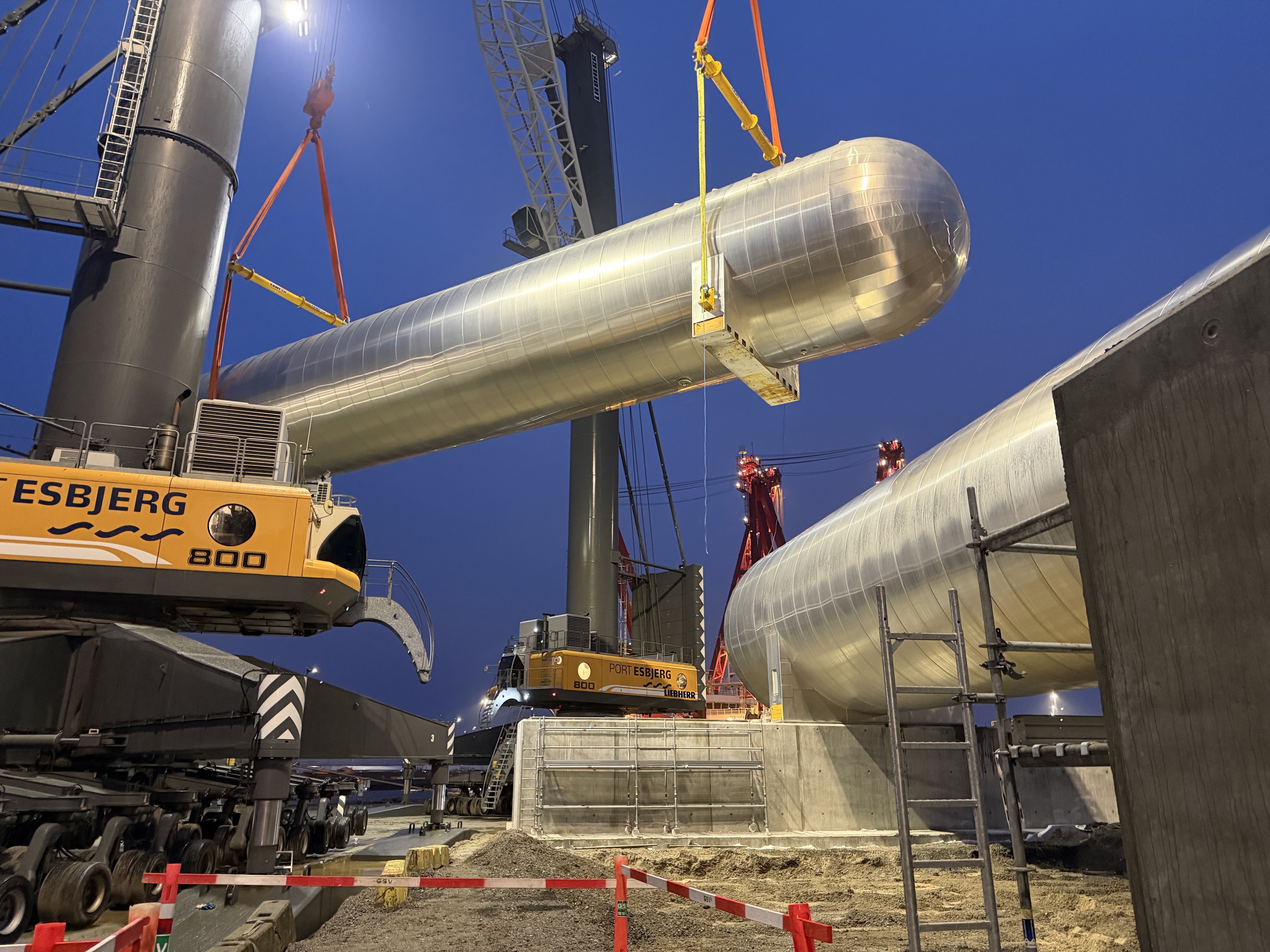
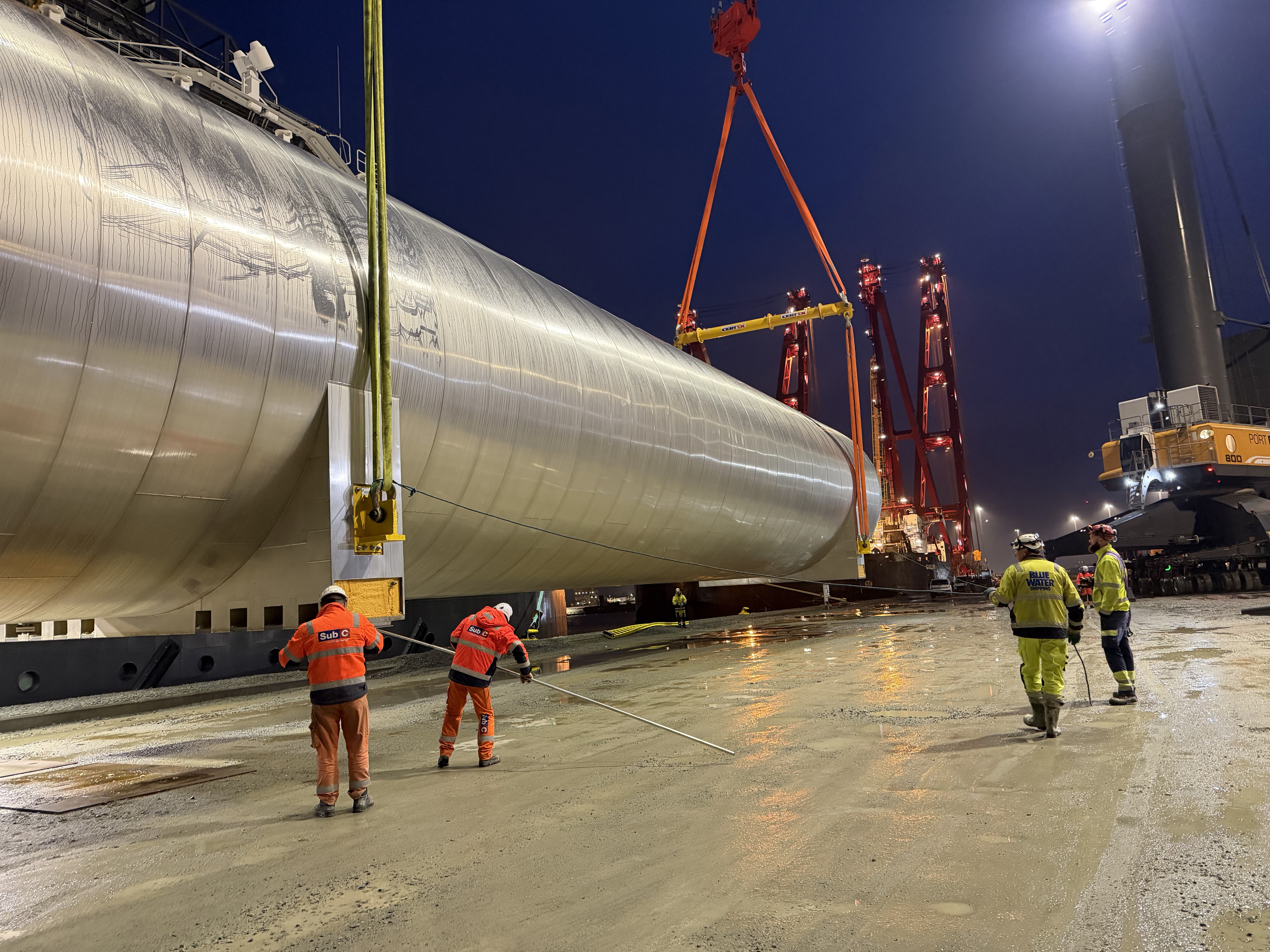
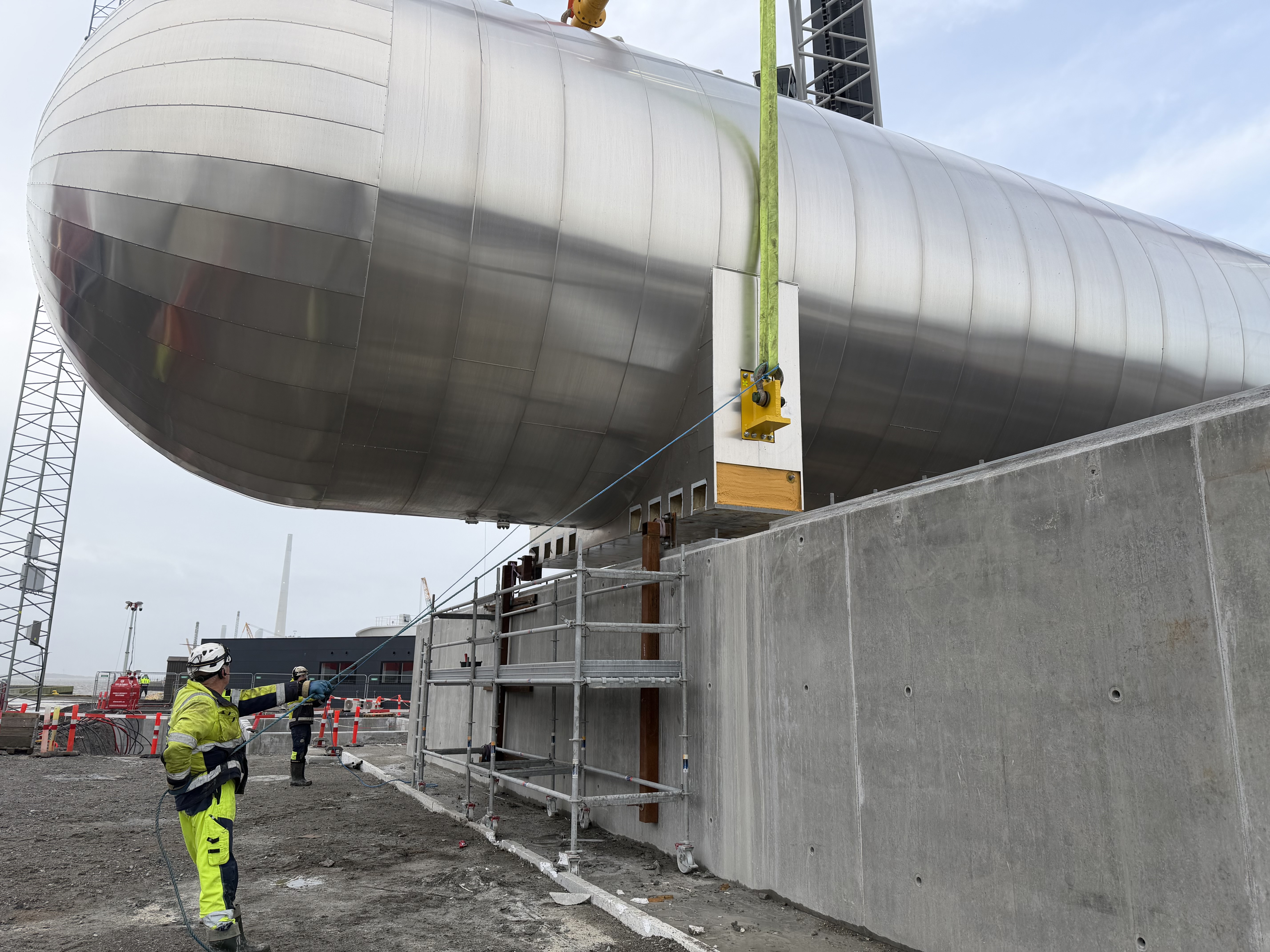
At Blue Water Shipping, our role is to connect the pieces. Drawing on experience from complex logistics, heavy lifts and project execution, we support the coordination and safe delivery of critical operations - including the recent lifting and installation of the first CO₂ storage tanks at the terminal site as well as enabling the CO₂ vessel contract between Ineos Energy and Dutch shipowner Wagenborg. From planning and sequencing to on-site execution, logistics is a key enabler in keeping such multi-stakeholder projects moving forward.
The successful installation of the first tanks is not only a construction milestone. It demonstrates how shared responsibility, clear roles and close cooperation across partners can deliver tangible progress in large-scale climate infrastructure. Each partner contributes specialized knowledge, but it is the collaboration between them that makes the project possible.
As Greensand Future progresses towards operations in 2026, this collaborative model will continue to be essential - not only for this project, but as a blueprint for future CCS developments across Europe.
This initiative illustrates how industry, infrastructure partners and policy frameworks can come together to deliver a solution that contributes to climate goals while maintaining high safety and environmental standards. At Blue Water Shipping, we’re proud to contribute our logistics expertise to such complex and impactful projects, helping turn ambitious goals into reality.
CCS isn’t a silver bullet - but it’s an essential part of the toolkit for achieving net-zero emissions and supporting a transition to a low-carbon economy. With projects like Greensand Future, Denmark and Europe are shaping scalable pathways for carbon management that other regions can build upon.